Magnesium glycinate is magnesium bound to the amino acid glycine. Magnesium citrate is magnesium bound to citric acid. Both are common supplement forms. The practical difference most people notice is digestive: citrate is more often linked to a loosening effect on the bowels (it's also sold as a laxative), while glycinate is the form you'll more often see in evening formulas.
Neither form is "best" for everyone. Here's how they compare, and how to pick based on what you want from a magnesium supplement.
The quick verdict:
- Choose magnesium glycinate if you want a form commonly used in evening and relaxation formulas, and digestive comfort matters to you.
- Choose magnesium citrate if you're comfortable with (or looking for) its effect on regularity, or you want one of the most widely available forms.
- Either way, check the elemental magnesium amount on the label, not the compound weight.
What's the difference between magnesium glycinate and citrate?
The main difference between magnesium glycinate and magnesium citrate is what the magnesium is bound to and how each tends to affect digestion. Glycinate is bound to the amino acid glycine and is common in evening formulas. Citrate is bound to citric acid and is more often linked to a laxative effect. Neither is best for everyone.
| Magnesium glycinate | Magnesium citrate | |
|---|---|---|
| Bound to | Glycine (an amino acid) | Citric acid |
| Elemental magnesium | Varies by compound; check the label | Varies by compound; check the label |
| Absorption evidence | Limited direct comparison data | Better absorbed than oxide in small studies† |
| Digestive effect | Often chosen to avoid a laxative effect | More often linked to a laxative effect |
| Common use | Evening and relaxation formulas | General use; also sold as a laxative |
†Per the NIH Office of Dietary Supplements, small studies found citrate (with aspartate, lactate and chloride) absorbed more completely than magnesium oxide and sulfate. Glycinate wasn't part of those comparisons.
What is magnesium glycinate?
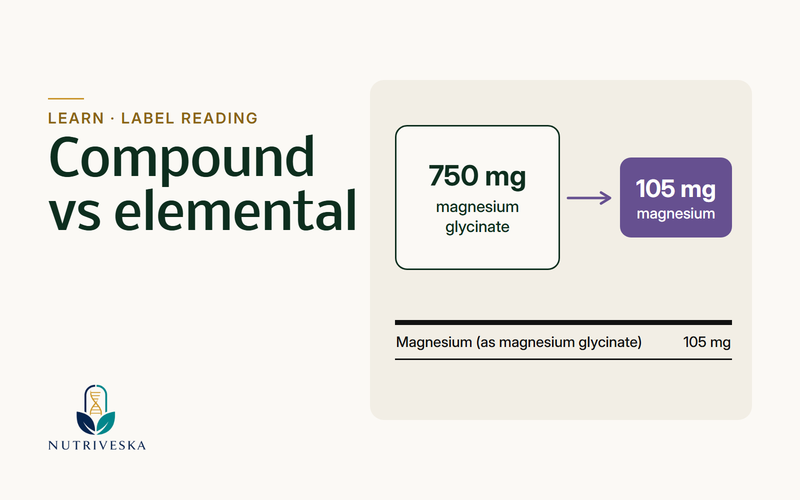
Magnesium glycinate (often called magnesium bisglycinate) is magnesium chelated to glycine. "Chelated" just means the mineral is attached to another molecule, here an amino acid. Glycine makes up most of the weight, which is why a capsule of magnesium glycinate contains far less magnesium than its milligram number suggests. More on that below.
People tend to reach for glycinate when they want magnesium as part of a calm evening routine. It's also the form many sleep and relaxation formulas use.
What is magnesium citrate?
Magnesium citrate is magnesium combined with citric acid. It's one of the most widely sold forms. According to the NIH Office of Dietary Supplements, small studies have found that magnesium in the aspartate, citrate, lactate and chloride forms is absorbed more completely than magnesium oxide and magnesium sulfate. (Glycinate wasn't part of those comparisons, which is one reason we don't rank the two forms on absorption here.)
Magnesium citrate also has a second life on pharmacy shelves: as an over-the-counter saline laxative, in much larger amounts than a daily supplement. That gives you a fair idea of its reputation for affecting the bowels.
Elemental magnesium: why the label numbers differ
Here's where a lot of comparisons go wrong. "500 mg of magnesium glycinate" and "500 mg of magnesium citrate" don't contain the same amount of magnesium, and neither contains 500 mg of it.
The figure that matters is elemental magnesium: the amount of the mineral itself, separate from what it's bound to. The share of magnesium differs from one compound to another, and even between versions of the same form, depending on exactly how it's made. That's why the compound weight on its own can't tell you how much magnesium you're getting. Look for the elemental amount, usually written as "Magnesium (as magnesium glycinate)" or "Magnesium (as magnesium citrate)".
Digestive tolerance
The NIH Office of Dietary Supplements lists diarrhea, nausea and abdominal cramping as possible effects of high magnesium intake from supplements. It names magnesium carbonate, chloride, gluconate and oxide as the forms most commonly reported to cause diarrhea.
Magnesium citrate is also used, at much larger doses, as an over-the-counter laxative (see MedlinePlus), so a looser-stool effect is a known possibility. That's a drawback if you take it at night and a benefit if regularity is your goal. Glycinate is often chosen by people who want to avoid that effect, though head-to-head tolerance studies between the two forms are limited. If you're unsure, start with the dose on the label and see how you feel.
Which form for an evening routine?
If your goal is a wind-down routine, magnesium glycinate is the form you'll see most often. Magnesium supports normal muscle function and relaxation as part of a balanced diet.* Glycinate's lower association with a laxative effect is a practical plus when you're taking something shortly before bed.
That doesn't make citrate "wrong" for evenings. Some people take it then without any issue. The difference is how you're likely to respond, not a ranking.
Many evening formulas also combine magnesium with other ingredients (L-theanine, GABA, melatonin, botanical extracts). Read what's in the full formula, not only the magnesium form.
How much magnesium is too much?
The NIH Office of Dietary Supplements sets a tolerable upper intake level of 350 mg per day for supplemental magnesium in adults. That figure is elemental magnesium from supplements and medications, not food. Magnesium naturally present in food isn't counted toward that limit.
For context, the recommended daily intake from all sources is 310–320 mg for most adult women and 400–420 mg for adult men. Supplements are meant to add to your diet, not replace it.
If you have kidney disease, are pregnant or nursing, or take medication (some antibiotics and other drugs interact with magnesium), talk with your healthcare professional before adding a supplement.
Where Nutriveska fits
Our evening formula uses magnesium glycinate. Each 3-capsule serving provides 750 mg of magnesium glycinate, which supplies 105 mg of elemental magnesium, well under the 350 mg upper limit for supplemental magnesium. It's combined with 200 mg L-theanine, 300 mg Ashwagandha Extract, 100 mg GABA, 5 mg vitamin B6 and 1 mg melatonin in our magnesium glycinate sleep supplement.
Suggested use is 3 capsules daily, 30–60 minutes before bedtime, with water. The full list of ingredients and amounts is on the product page, in line with how we list ingredient amounts.
FAQ
Which is better for sleep, magnesium glycinate or citrate?
Neither is universally better. Glycinate is the form more often used in evening and relaxation formulas. Citrate is more likely to have a laxative effect, which some people prefer to avoid before bed.
Is magnesium glycinate gentler on the stomach?
It's often chosen for that reason, though direct comparison studies are limited. Citrate is more often associated with loose stools, especially at higher amounts.
Can you take magnesium glycinate and citrate together?
Some products combine forms. What matters is your total elemental magnesium from supplements, which shouldn't exceed 350 mg per day unless a healthcare professional advises otherwise.
When should you take magnesium glycinate?
Follow the label. Evening formulas are typically taken before bed; our formula's directions are 3 capsules daily, 30–60 minutes before bedtime, with water.
These statements have not been evaluated by the Food and Drug Administration. This product is not intended to diagnose, treat, cure, or prevent any disease.
Sources
- NIH Office of Dietary Supplements. Magnesium: Fact Sheet for Health Professionals.
- NIH Office of Dietary Supplements. Magnesium: Fact Sheet for Consumers.
- MedlinePlus (U.S. National Library of Medicine). Magnesium Citrate.