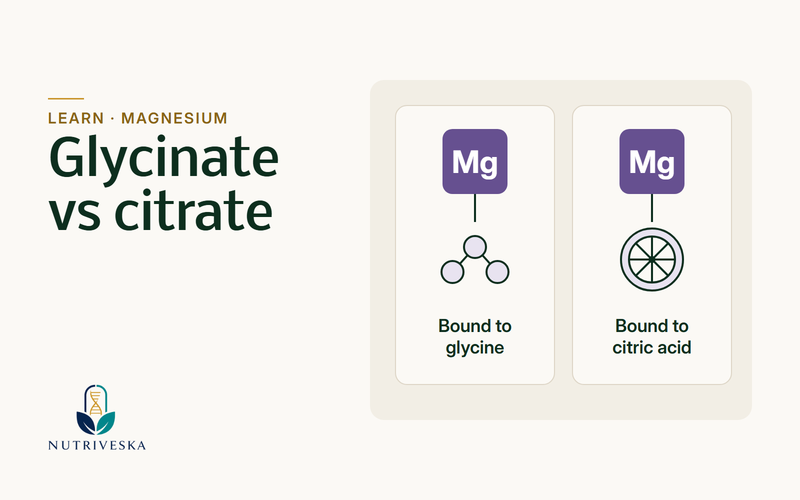
Magnesium in supplements always comes attached to something else (glycine, citric acid, oxygen), and that partner adds weight. So 750 mg of magnesium glycinate doesn't mean 750 mg of magnesium. In our formula, it provides 105 mg.
That one distinction explains most of the confusion around magnesium labels.
What is elemental magnesium?
Elemental magnesium is the amount of actual magnesium in a supplement, not counting the molecule it's bound to. Supplements contain magnesium compounds, such as magnesium glycinate, citrate or oxide, and only part of each compound's weight is magnesium. The elemental amount is the figure to compare across products and against daily intake guidelines.
Compound weight vs elemental magnesium
Picture a 750 mg serving of magnesium glycinate as a mixture by weight. Glycine, an amino acid, accounts for most of it. Magnesium accounts for the rest.
For Nutriveska Magnesium Sleep & Emotional Health Support, our supplier confirms the numbers:
| What's measured | Amount per 3-capsule serving |
|---|---|
| Magnesium glycinate (the whole compound) | 750 mg |
| Elemental magnesium (the mineral itself) | 105 mg |
In other words, in our formula, magnesium makes up about 14% of the magnesium glycinate's weight.
Both numbers are accurate. They answer different questions: "How much of the ingredient is in the capsule?" and "How much magnesium does that ingredient provide?"
Why different forms give different amounts
Every magnesium compound has a different partner molecule, so the share of magnesium depends on the specific compound. Small partners such as oxygen (in magnesium oxide) leave a high share of the weight as magnesium. Larger partners such as amino acids or citric acid leave a smaller share. Even within one named form, the exact percentage can vary with how the ingredient is made, for example whether it contains water or is blended with another magnesium source.
That's why you can't reliably work out elemental magnesium from a compound name alone. The label, or the manufacturer, is the source to trust.
A high magnesium share doesn't make a form better, either. According to the NIH Office of Dietary Supplements, small studies have found magnesium in the aspartate, citrate, lactate and chloride forms is absorbed more completely than magnesium oxide and sulfate. Form choice is about more than the percentage, as our magnesium glycinate vs citrate comparison shows.
How to read a magnesium label
You'll see magnesium declared a few different ways:
- Elemental amount with the source named. For example, "Magnesium (as magnesium glycinate) 105 mg". The 105 mg is the magnesium; "as magnesium glycinate" tells you the form.
- Compound amount. For example, "Magnesium Glycinate 750 mg". This is the weight of the whole compound.
- Both. Some labels give the compound weight and the elemental amount side by side.
When you're comparing products or adding up intake from several supplements, use the elemental figure.
A note on our packaging
Our current packaging lists the compound amount: Magnesium Glycinate, 750 mg. Upcoming production batches will declare the elemental amount on the Supplement Facts panel as Magnesium (as Magnesium Glycinate), 105 mg. Each serving provides the same 750 mg of magnesium glycinate and 105 mg of magnesium. Only the way the amount is expressed on the panel changes. We list both figures on the product page so you have them either way.
How much magnesium do adults need?
According to the NIH Office of Dietary Supplements:
- Recommended Dietary Allowance (RDA), from all sources (food, beverages, supplements): 310–320 mg per day for most adult women; 400–420 mg per day for adult men. Needs are higher during pregnancy.
- Tolerable Upper Intake Level for supplemental magnesium: 350 mg per day for adults. This limit covers magnesium from supplements and medications only, not food.
That's the most practical reason elemental magnesium matters. The 350 mg limit refers to elemental magnesium. If you take more than one product that contains magnesium (a multivitamin, an electrolyte mix and a sleep formula, for example), add up the elemental amounts, not the compound weights.
If you have kidney disease, take medication, or are pregnant or nursing, talk with your healthcare professional before taking a magnesium supplement.
Where Nutriveska fits
Each 3-capsule serving of our evening formula provides 105 mg of elemental magnesium from 750 mg of magnesium glycinate, well within the 350 mg upper limit for supplemental magnesium. It's combined with 200 mg L-theanine, 300 mg Ashwagandha Extract, 100 mg GABA, 5 mg vitamin B6 and 1 mg melatonin. Magnesium supports normal muscle function and relaxation as part of a balanced diet.*
You'll find the full formula on the 750 mg magnesium glycinate (105 mg elemental magnesium) product page. Suggested use is 3 capsules daily, 30–60 minutes before bedtime, with water. It's part of our ingredient transparency standards to show both the compound and the mineral amount.
FAQ
How much elemental magnesium is in magnesium glycinate?
It depends on the specific ingredient, so check the label for the elemental amount. In our formula, 750 mg of magnesium glycinate provides 105 mg of elemental magnesium.
Is 750 mg of magnesium glycinate too much?
750 mg is the compound weight. In our formula it provides 105 mg of elemental magnesium, which is the figure to compare with the 350 mg daily upper limit for supplemental magnesium.
Do labels list elemental or compound weight?
Both appear. Many labels list the elemental amount with the form in parentheses, such as "Magnesium (as magnesium glycinate)"; some list the compound weight, and some list both.
Does the upper limit include magnesium from food?
No. The 350 mg upper limit applies to magnesium from supplements and medications. The RDA includes all sources, food included.
These statements have not been evaluated by the Food and Drug Administration. This product is not intended to diagnose, treat, cure, or prevent any disease.
Sources
- NIH Office of Dietary Supplements. Magnesium: Fact Sheet for Health Professionals.
- NIH Office of Dietary Supplements. Magnesium: Fact Sheet for Consumers.
- U.S. Food and Drug Administration. Dietary Supplement Labeling Guide: Chapter IV. Nutrition Labeling.